Understanding Sciatica and Sitting
Sciatica is pain that radiates along the sciatic nerve — from the lower back through the hip and buttock and down the back of the leg. If you have it, you already know: sitting makes it worse. The seated position increases pressure on the sciatic nerve through disc compression, piriformis muscle tightening, or direct nerve compression against the seat surface.
Sustained sitting increases intradiscal pressure in the lumbar region, which can worsen disc herniation — the most common cause of sciatica. This is why choosing the right chair matters so much if you deal with sciatic pain daily.
What Causes Sciatica to Worsen While Sitting
Several things happen when you sit for long stretches:
The seated position compresses the L4-L5 and L5-S1 discs — the most common sites for herniation that causes sciatic symptoms. Slumping makes it worse by increasing flexion at the lower spine, which loads the posterior disc right where herniations typically occur.
Then there’s direct nerve compression. Hard or poorly shaped seat pans can press on the sciatic nerve as it passes through the buttock. Your hamstrings also shorten from prolonged hip and knee flexion, which increases tension on the nerve. And in some people, the sciatic nerve passes through or beneath the piriformis muscle, which tightens the longer you sit.
Key Chair Features That Help
Adjustable Lumbar Support
Keeping your lumbar curve intact reduces posterior disc pressure — the main mechanical cause of most sciatic symptoms. You want adjustable depth and height so you can dial in the exact position that works for your back.
Recline with Multi-Lock
Reclining to 110-120 degrees drops intradiscal pressure noticeably compared to sitting bolt upright. A multi-lock mechanism lets you find the angle that feels best and lock it there, rather than constantly fighting the backrest.
Seat Pan Design
Look for a seat with enough depth, decent cushioning (high-density foam, 5+ cm), and a waterfall front edge. That curved front edge matters — it takes pressure off the back of your thigh and the sciatic nerve running beneath it. Seat depth adjustability is especially useful here.
Seat Material
Mesh or well-contoured foam distributes pressure more evenly than flat, hard surfaces. Some manufacturers engineer seat pans with pressure-relief zones in the rear portion.
Tilt Function
Being able to shift between reclined and upright positions throughout the day varies the load on your lumbar spine. This matters because static postures — even “good” ones — tend to aggravate sciatica. Movement is your friend.
How to Set Up Your Chair
- Adjust lumbar support to keep your natural inward curve. For sciatica, this is the setting that makes the biggest difference.
- Set the recline to 110-115 degrees for sustained work — this reduces disc pressure.
- Adjust seat depth so you have 2-3 finger widths of space between the seat edge and the back of your knees.
- Set seat height so your thighs slope slightly downward (hips just above knees). This opens the hip angle and eases sciatic nerve tension.
- Use the tilt function to shift positions every 20-30 minutes. Staying in one position, no matter how good, will aggravate sciatica.
- Stand and walk for 2-5 minutes every 30-45 minutes. For sciatica specifically, this matters even more than it does for general back pain.
When to See a Doctor
Sciatica requires medical evaluation when:
- Pain is severe and not relieved by any position
- Leg weakness or foot drop develops (difficulty lifting the front of the foot)
- Numbness in the groin or saddle area (potential cauda equina syndrome — seek emergency care)
- Bladder or bowel control is affected (emergency)
- Symptoms progressively worsen over days or weeks
- Pain persists beyond 6-8 weeks despite conservative measures
FAQ
Is a harder or softer seat better for sciatica?
Neither extreme works well. You want a medium-firm seat — something that distributes pressure without letting your pelvis sink into posterior tilt. High-density foam (40-55 kg/m3) generally hits the right balance. Too soft, and your pelvis sinks, increasing lumbar flexion and disc pressure. Too hard, and you get direct pressure on the sciatic nerve where it runs through the buttock. Mesh seats are another good option since they spread pressure evenly.
Should the seat be tilted forward for sciatica?
It can help. A slight forward seat tilt (5-10 degrees) promotes anterior pelvic tilt and helps keep your lumbar curve, which some sciatica sufferers find relieving. But this is not universal — it depends on what’s causing your compression and where. You can get the tilt through your chair’s mechanism or a simple wedge cushion. Try it for a few days and see how your symptoms respond. If it feels worse, go back to neutral.
Can switching between sitting and standing help sciatica?
Yes, and it’s one of the best things you can do. Alternating between sitting and standing every 30-45 minutes reduces sustained disc loading and lets the sciatic nerve shift position. A sit-stand desk paired with a good ergonomic chair gives you the most flexibility for managing sciatica throughout the workday.
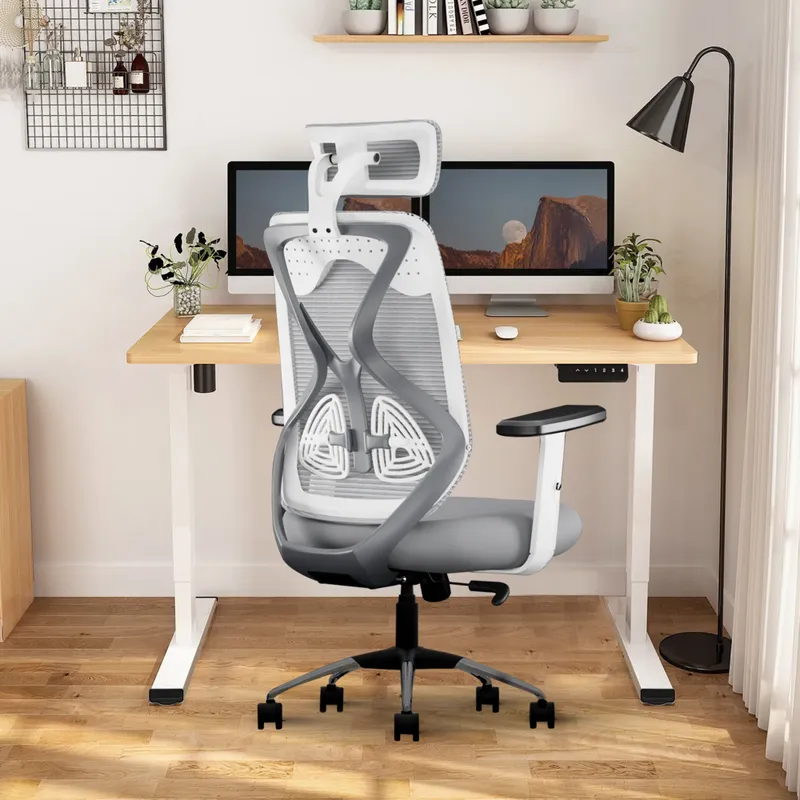
![ASTRIDE Ergofit Ergonomic Office Chair for Home | 3-Years Warranty | 2D Headrest, Adjustable Arms & Lumbar Support | Tilt Lock Mechanism [Heavy Duty Chromium Metal Base, Grey-White]](/images/chairs/B0CN49729X.webp)