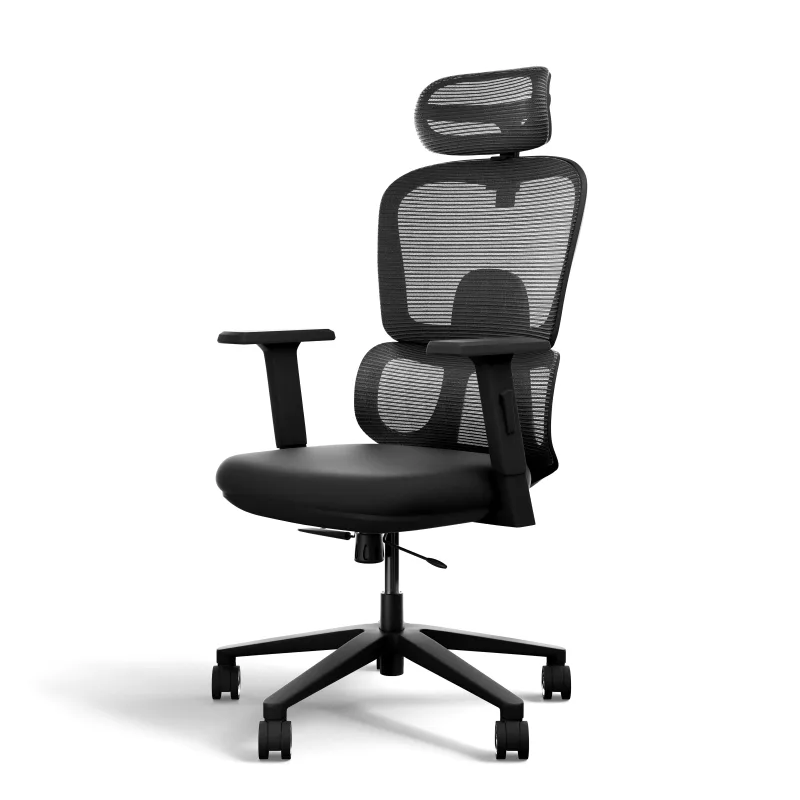
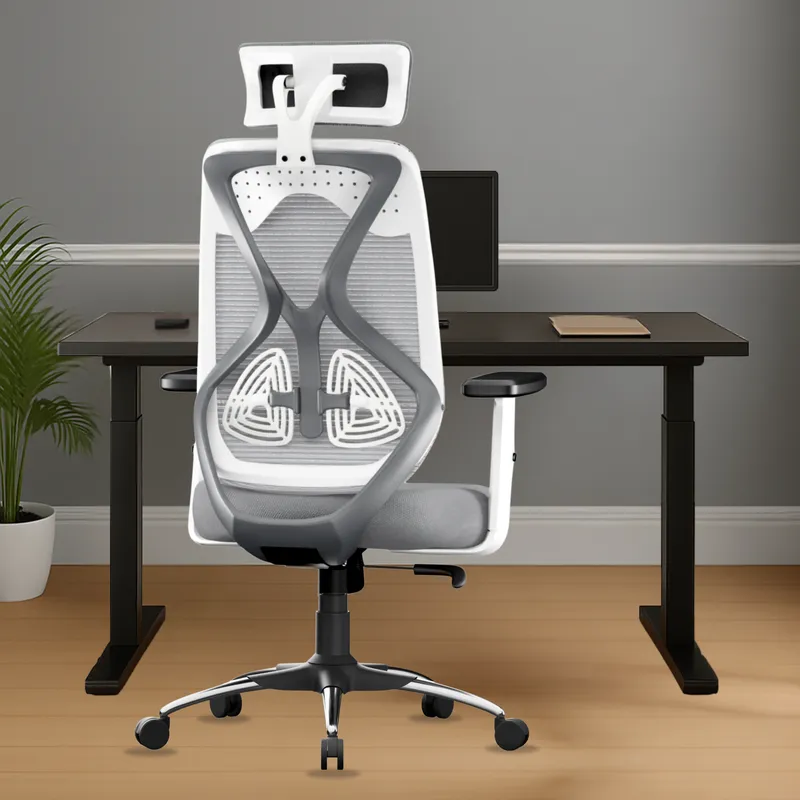
The Challenge of All-Day Sitting
Sitting for 8+ hours a day is a different game than sitting for 4. Discomfort doesn’t scale linearly — it ramps up hard in the second half of the day. Your muscles fatigue, spinal discs lose hydration, and pressure points develop in places you didn’t know existed.
If you’re a developer, content creator, or anyone else in India glued to a desk for a full workday, your chair matters more than almost any other piece of office gear.
Why Standard Chairs Fail at 8+ Hours
Most office chairs are designed for meetings and short stints, not marathon workdays. Here’s where they fall apart:
- Limited adjustability means you can’t fine-tune the fit to your body. Small misalignments that are fine at hour one become genuinely painful by hour six.
- Cheap foam compresses within 2-3 hours and stops distributing pressure properly. You end up sitting on a flat slab.
- No recline or tilt locks you into one posture all day. Your body needs to move.
- Non-breathable materials trap heat, which leads to fidgeting and bad posture — especially in Indian summers.
- Budget mechanisms and components can wear out within 6-12 months of heavy daily use.
Key Chair Features for Marathon Sessions
Comprehensive Adjustability
For 8+ hour use, every adjustment point matters. At minimum, you want:
- Seat height adjustment (pneumatic)
- Adjustable lumbar support (height + depth)
- Armrest adjustment (at least 2D, ideally 3D or 4D)
- Backrest recline with multiple lock positions
- Seat depth adjustment
Each extra adjustment lets you shift into a slightly different position throughout the day. That variety is what keeps you comfortable past hour five or six.
Synchro-Tilt or Multi-Lock Mechanism
A synchro-tilt mechanism lets you lean back smoothly without losing ergonomic alignment. The backrest reclines at roughly twice the rate the seat tilts (a 2:1 ratio), which keeps the angle between your thighs and torso open and comfortable. Multi-lock tilt gives you set positions to click into. Either is a big upgrade over a basic fixed-back chair.
High-Density Seat Foam or Mesh
Your seat material needs to hold up over a full workday. High-density molded foam — at least 50mm thick with 45+ kg/m3 density — resists the compression that makes cheap chairs feel like sitting on plywood by 3 PM. Full mesh seats avoid the foam problem entirely and distribute pressure well, though they won’t contour to your body the way foam does.
Headrest for Break Positions
Over an 8+ hour day, you need reclined rest breaks. A headrest lets you actually relax your neck during those breaks instead of holding your head up. Not everyone uses a headrest during focused work, but for break positions it’s genuinely useful.
Warranty as Quality Signal
For heavy daily use, warranty length is a decent proxy for build quality. If a manufacturer backs a chair with a 3-year or longer warranty, they’re generally using better gas lifts, tilt mechanisms, and casters. It’s not a perfect signal, but it’s one of the more reliable ones.
How to Use Your Chair Over 8+ Hours
- Morning setup — Start upright (100-105 degree recline), lumbar support engaged, feet flat on the floor.
- Every 30 minutes — Make a micro-adjustment. Shift your recline angle, reposition the armrests, or just stand up for a moment.
- Every 60-90 minutes — Take a proper 5-minute standing or walking break. Your spinal discs need this to rehydrate.
- Afternoon shift — As fatigue builds, try a slightly more reclined position (110-115 degrees). Many people find this more comfortable in the second half of the day.
- Regular recline breaks — 2-3 times a day, recline fully (120+ degrees) for about 5 minutes with headrest support.
The bottom line: no single posture works for 8 hours straight. The real value of a good ergonomic chair is that it lets you switch between multiple supported positions easily.
FAQ
What is the most important single feature for 8+ hour sitting?
Adjustable lumbar support. Without it, your lower back muscles have to work constantly to keep your spine aligned — and they’ll fatigue long before your workday ends. With proper lumbar support, the backrest shares that load, which delays discomfort by hours. Everything else — armrests, headrest, tilt — builds on having good lumbar support first.
Is mesh or foam better for long sitting sessions?
Both work, but the trade-offs are real. Mesh breathes better and gives consistent support that doesn’t degrade through the day — a big deal in Indian heat. Foam gives you more cushioning and contours to your body, but it can soften over a long session. A lot of premium chairs go hybrid: mesh back for breathability, foam seat for comfort. Honestly, if you run warm or don’t have great AC, lean toward mesh. If cushioning matters more to you, go foam — just make sure it’s high-density.
How often should an office chair be replaced with daily 8+ hour use?
Warranty length gives you a rough baseline — a chair with a 3-year warranty should hold up at least that long under heavy use. Most decent ergonomic chairs last 5-7 years with daily 8+ hour use, though foam wears out faster than mechanisms do. Time to replace when you notice: foam that stays compressed overnight instead of bouncing back, looseness or play in the tilt mechanism, a gas lift that won’t hold height, or persistent discomfort even after you’ve fiddled with every adjustment.